

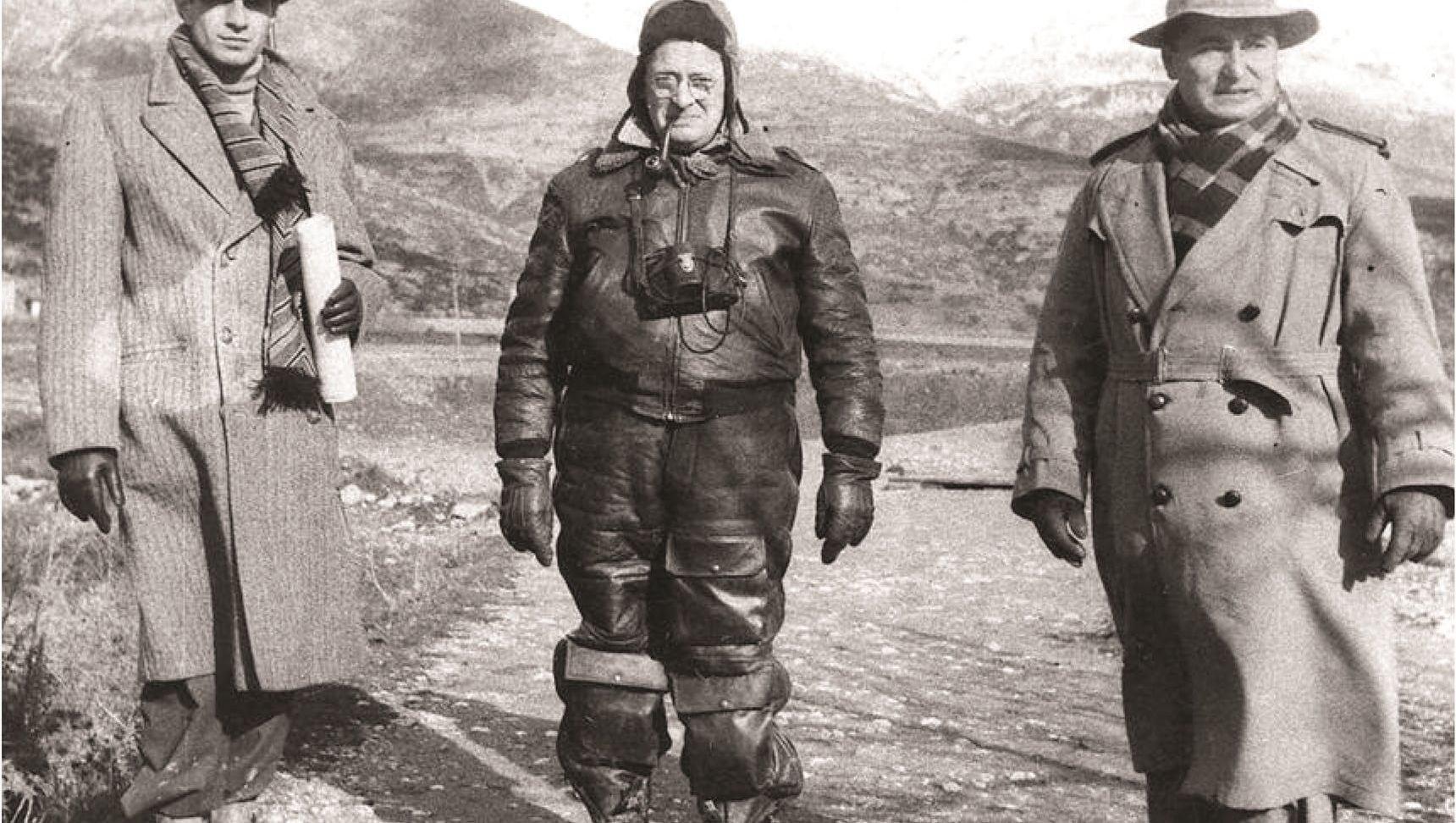
The origins of the Hellenic Geological Service coincide with the beginning of the interwar period. However, it operated throughout almost the entire duration up to the end of World War II as a small public department under the Ministry of National Economy, with limited staff and resources.
By Fotini Chalkiopoulou*
As geologist-geophysicist D. Kiskyras noted in a statement at the 1st Conference on Mineral Resources in 1978: “Unfortunately, the Geological Service remained rudimentary until World War II. It never managed to have more than five geologists, while the available funds amounted to only 10,000–30,000 drachmas per year. These were intended not only for mineral exploration but also for landslide studies, earthquake-affected areas, thermal springs, etc.”
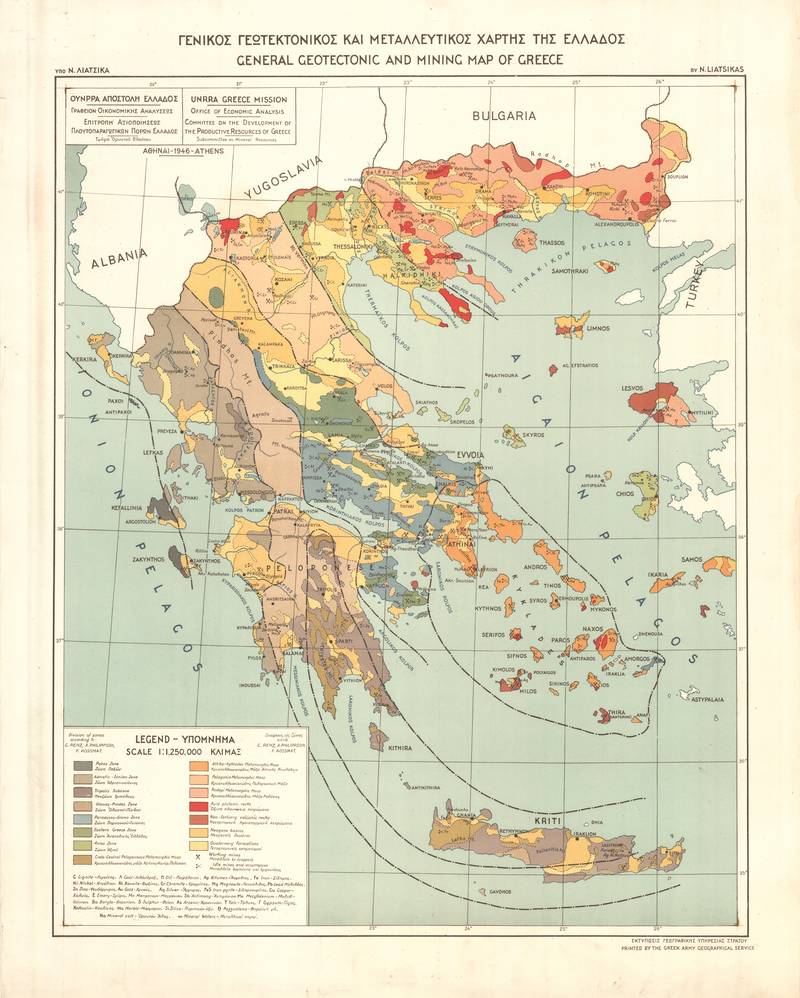
N. Liatsikas (1946), General Geotectonic & Metallogenic Map of Greece (UNRRA).
The outbreak of World War II inevitably affected the Geological Service, which had just begun to cautiously expand its scope to include a Geophysical Section alongside the Geological Section in 1939. Nevertheless, during the reconstruction period, it contributed scientists and experts such as N. Liatsikas, G. Aronis, and K. Zachos to committees and agencies working for the nation’s recovery. The first systematic documentation of Greece’s mineral resources was conducted after the war by scientists of the Geological Service. In 1947, within the framework of the United Nations Relief and Rehabilitation Administration (UNRRA), the Committee for the Development of Greece’s Productive Resources (EAPPE) was established, including a Subcommittee on Mineral Resources composed of N. Liatsikas, I. Solomos, S. Kogevinas, G. Andreakos, and A. Arnos. Their findings were published in the book “The Mineral Wealth of Greece” (UNRRA, 1947), aiming to help utilize these resources for the country’s reconstruction.
By the late 1940s, the urgent need to reorganize all state services related to geology and mineral exploration became evident. The goal was to consolidate them into a single body capable of effectively fulfilling this vital role for the national economy. This led to the establishment of the historic Institute of Geology and Mineral Research (IGEY) in 1952.
*Fotini Chalkiopoulou, along with other scientists of the HSGME, undertook the research and writing of the historical album “100 Years of Geological Service in Greece.”
**Header photo: Experts of the MARSHALL Plan.
Read the full historical album of the HSGME online at the following link: