

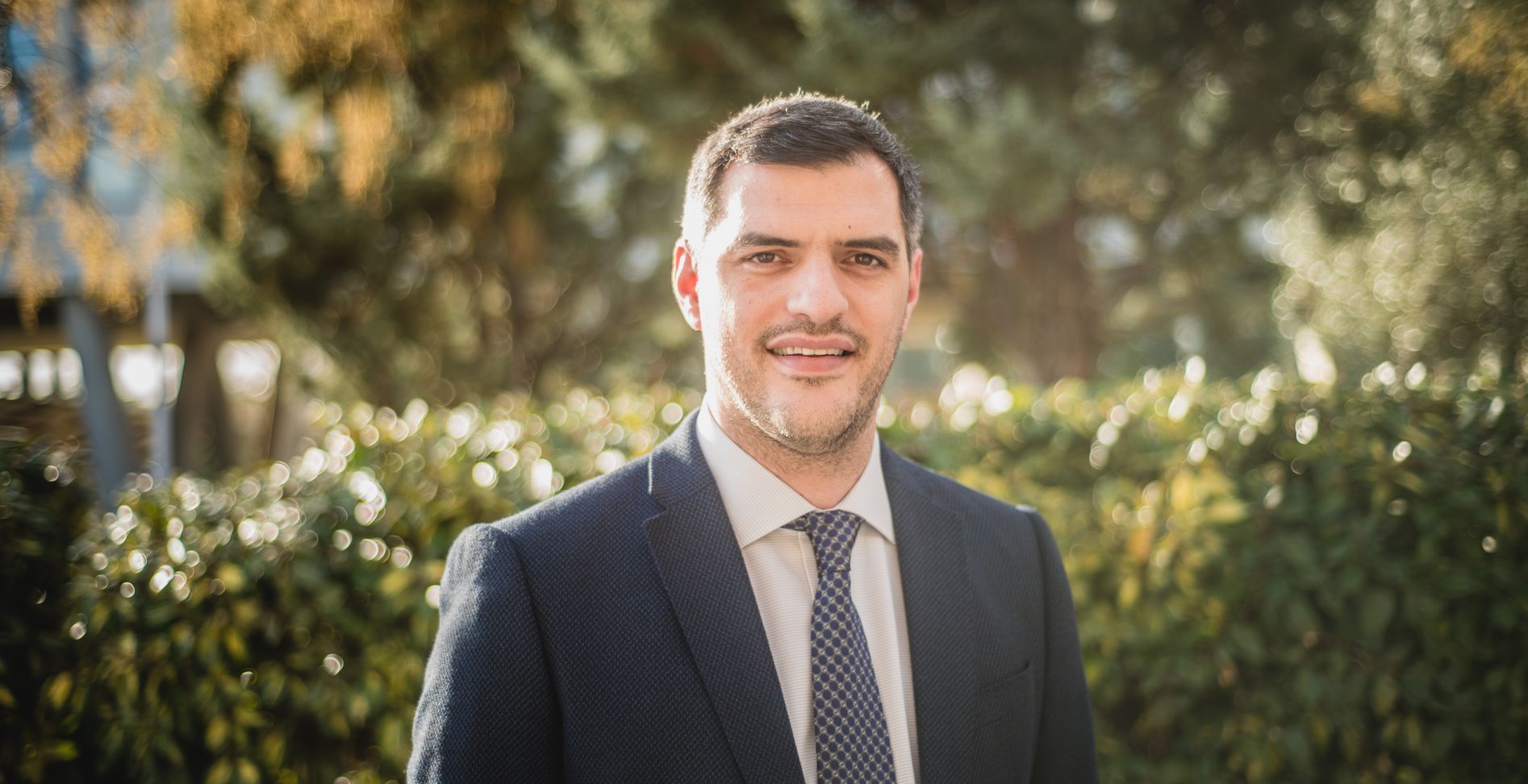
Interview with the General Director of H.S.G.M.E., Andreas Tsokos, published in Kathimerini on Sunday (22.11.20), conducted by journalist Stavros Papantoniou.
Some 2,500 years ago, Greece, embodying the values of what we now call the West, raised its “wooden walls” against the East. The question of how world history might have unfolded had the Battle of Salamis ended differently has intrigued historians for centuries. Yet history is not written with “what ifs.”
The priestess Aristonike, through her famous second oracle to the Athenians urging them to rely on the “wooden walls” for the salvation of their city during the second Persian campaign, revealed the way forward. As Herodotus writes, “Trust in the wooden wall alone, for it shall remain impregnable.” These wooden walls were not the ancient fortifications of the Acropolis, but rather the Athenian triremes—a truth perceived by the sharp mind of Themistocles, who convinced his fellow citizens that the oracle referred to their ships.
At the time of the Battle of Salamis, democracy was barely thirty years old. A Persian conquest of Athens would have profoundly altered the course of history as we know it today, reshaping Western civilization and the world beyond.
Yet to write that pivotal chapter in Greek history required not only courage and strategy but also luck—good fortune. A decisive factor for the Greeks defending the West against the Persians was the discovery in 483 B.C. of a rich silver deposit in the Lavreotiki Maronia (modern Kamareza). Through the famous “Naval Law,” Themistocles persuaded the Athenians to forgo their individual shares—worth ten drachmas, roughly half a craftsman’s monthly wage—from the Laurion mines’ revenues, to finance the construction of 200 of the 378 triremes that fought at Salamis, all for a “national cause.”
Without this “silver vein” of the Golden Age, nothing would have been the same. Empowered by the resources of the Laurion mines, Athens prevailed—and with it, the evolution of Western civilization as we know it was preserved.
Today, Laurion’s story is once again stepping into the spotlight. Andreas Tsokos, General Director of the Hellenic Survey of Geology and Mineral Exploration (H.S.G.M.E.), told Kathimerini that “the Battle of Salamis proved that achieving a great national goal requires not only unity and strategic intelligence, but also the effective use of our national resources.” The mineral wealth of Lavrio, which has left an indelible mark on Greek history, now seeks to offer a new kind of potential—this time, for regional development.
In a pioneering collaboration, the H.S.G.M.E., the Ministry of Culture, and the Municipality of Lavreotiki have joined forces to create a UNESCO Geopark in the area. The geological wealth, the striking landscape of the old mines, and the heritage of centuries-long mining activity are expected to open a new “vein” of opportunity. Under the coordination of H.S.G.M.E., Greece is seeking the inclusion of the region in the UNESCO World Heritage List through the establishment of the Lavreotiki Geopark, which will play a vital role in highlighting Greece’s geo-mining heritage. The nomination dossier is in its final stages of preparation and is expected to be submitted to UNESCO soon.
“Over time, the land of Attica has shown great potential, and as scientists, it is our duty to bring it to light. The geological wealth of our country is vast, yet little has been done so far to showcase and utilize it,” adds Andreas Tsokos. “Through the Lavrio mines, we aim to introduce Greeks to the capabilities and achievements of this vital sector, while also familiarizing younger generations with our natural wealth.”
And a museum
Beyond the Geopark initiative, work has already begun at the Olympic Village facilities to highlight the mineral and rock collection. As Mr. Tsokos explains, the goal is “to develop this wealth into a modern museum, accessible to more schools than those we currently host.” The preliminary review application has already been approved, serving as a roadmap for the museum’s recognition by the Ministry of Culture as a national reference point for geological research in Greece—eventually evolving into the National Geological Museum.
“The completion of the museum will be a landmark project for the role and outreach of H.S.G.M.E., with multiple benefits for the educational community and for the Municipality of Acharnes that hosts us,” concludes Mr. Tsokos.
Even after 2,500 years, the silver vein still has much to offer.
Source: Kathimerini