
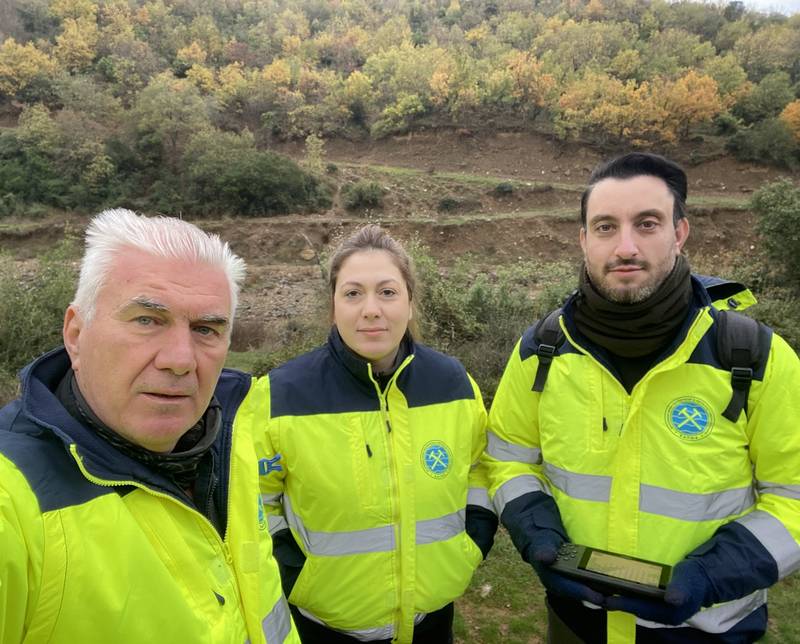
As part of the implementation of the European project MultiMiner, a team from the Hellenic Survey of Geology and Mineral Exploration (H.S.G.M.E.), consisting of the project manager Dr. Konstantinos Laskaridis, Head of the Directorate of Mineral Raw Materials and Mining (DOMME), and geologists Dr. K. Mavrogonatos and Dr. M. Anastasatou, carried out fieldwork in the Public Mining Area (PMA) of Kallyntiri.
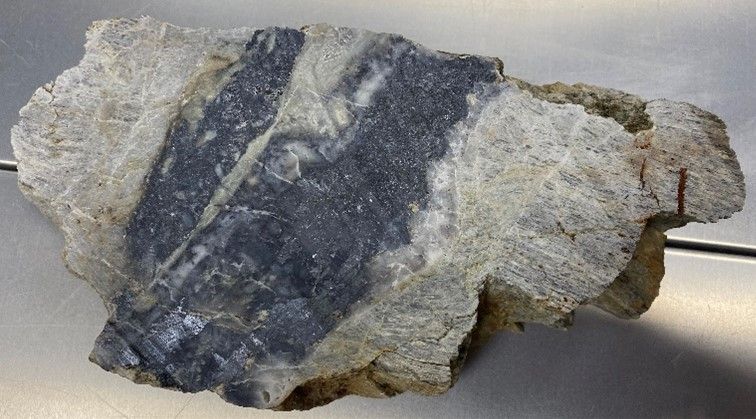
The MultiMiner project aims to address the continuously growing problem of the European Union’s dependence on Critical Raw Materials (CRMs). The Kallyntiri PMA is one of the five pilot areas across Europe included in the project, where the main mineral identified is stibnite, from which the critical raw material antimony can be produced.
The fieldwork focused on three key areas:
(a) Identification and recording of old mining sites of antimony ore and waste disposal areas (mine tailings).
(b) Detection of new mineralized occurrences with the collection of representative samples.
(c) Geochemical soil study using a grid-based approach with a portable XRF device.
The collected ground-based data will contribute to the development of innovative algorithms for the more effective use of Earth Observation technologies in mineral resource exploration.
The MultiMiner project aims to create a foundation for improving CRM exploration and monitoring practices through advanced and innovative machine learning solutions. Field operations for the implementation and refinement of developed algorithms include manual sampling for mineralogical and geochemical study, spectral measurements of rocks, drone-based water sampling and qualitative testing, surface soil moisture measurements, and the use of existing data collected by mining companies for systematic monitoring purposes.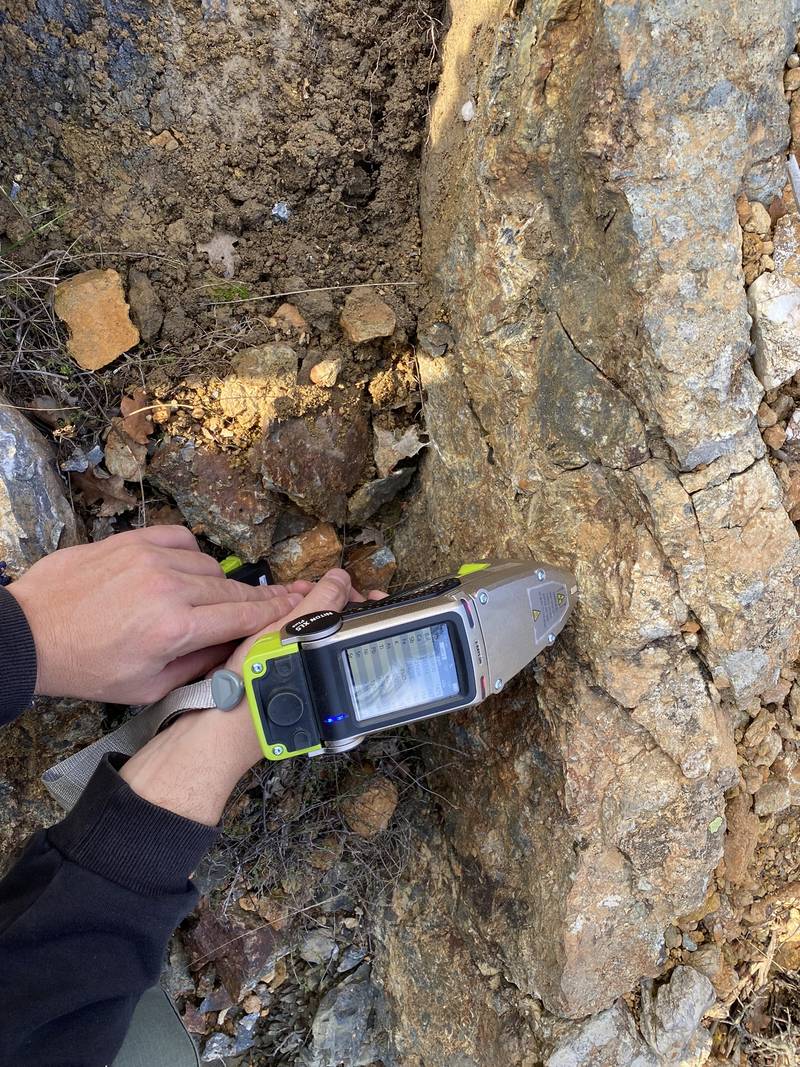
The pan-European MultiMiner consortium consists of the following partners: Geological Survey of Finland (GTK), Technical Research Center of Finland (VTT), Yara Suomi Oy (Yara), Hellenic Survey of Geology and Mineral Exploration (H.S.G.M.E.), European Science Foundation (ESF), Czech Geological Survey (CGS), University of Leoben (MUL), Federal Institute for Geosciences and Natural Resources (BGR), Veitsch-Radex Gmbh & Co Og (RHI Magnesita), GeoSphere Austria, Hellas Gold S.A (HG), EFTAS Remote Sensing Technology Transfer GmbH (EFTAS), Technical University of Munich (TUM), and Nordkalk.