

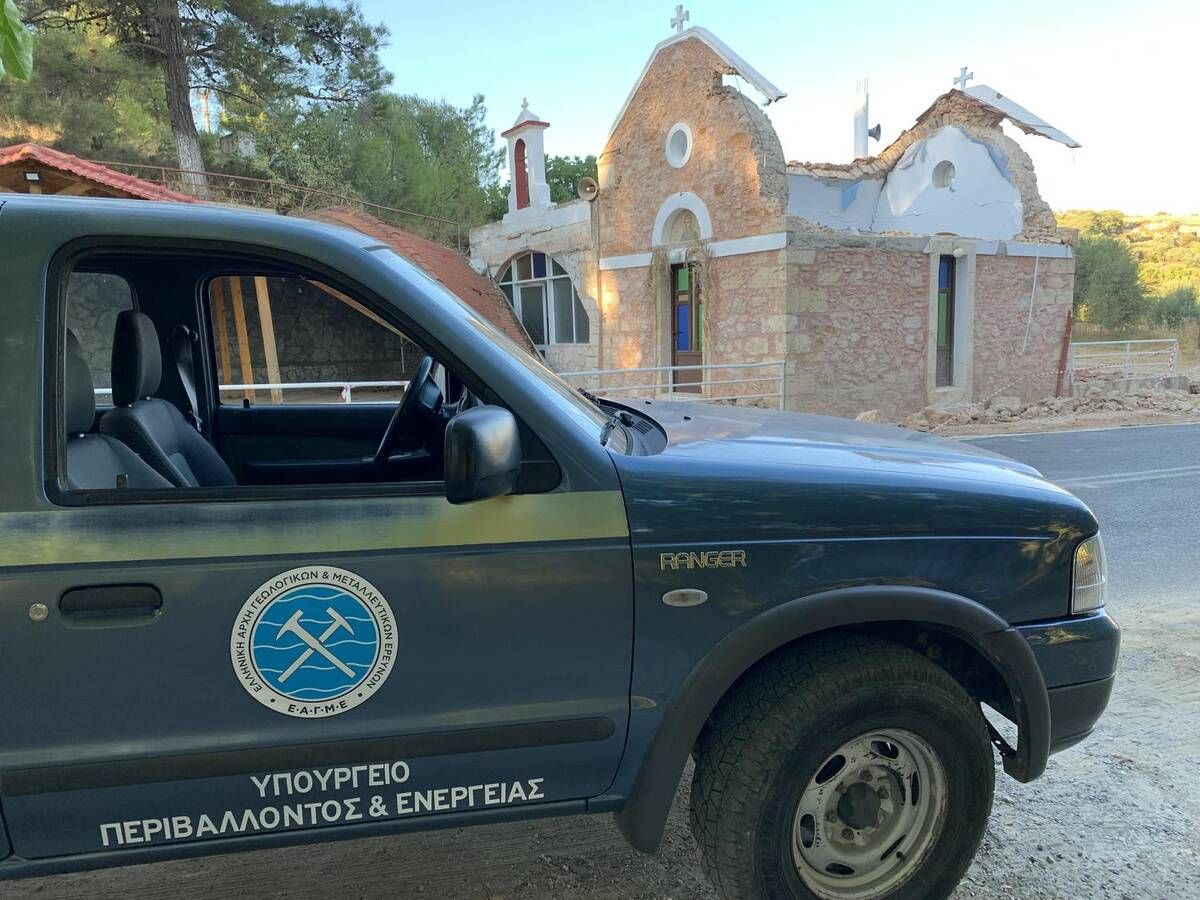
They analyze geological phenomena, conduct on-site inspections, and rush to offer their valuable expertise in the aftermath of major natural disasters. They are the engineers and specialized scientists of the Hellenic Survey of Geology and Mineral Exploration (H.S.G.M.E.), and their contribution is invaluable. Geologist Andreas Tsokos, General Director of H.S.G.M.E., speaks to Newsbomb.gr.
When one refers to H.S.G.M.E. — formerly IGME — they might think of geological phenomena or even philosophical inquiries. However, the reality is entirely different.
Few people are aware that the Hellenic Survey of Geology and Mineral Exploration has its own “Rapid Response Team”, which intervenes immediately after earthquakes and landslides.
In recent years, Greece has been severely affected by natural disasters. Intense flooding, major earthquakes, and serious landslides form the backdrop of heightened geological activity impacting citizens, sometimes even resulting in the loss of human lives.
Standing by citizens and local authorities in managing natural disasters is the H.S.G.M.E. Rapid Response Team, in collaboration with the General Secretariat for Civil Protection.
The General Director of the Hellenic Survey of Geology and Mineral Exploration (H.S.G.M.E.), Mr. Andreas Tsokos, explains to Newsbomb.gr the vital role of this little-known yet highly significant team. “The H.S.G.M.E. Rapid Response Team is activated following serious landslides, major earthquakes, or other natural disasters of geological origin.”

Specifically, a specialized unit of the team arrives within 24 to 36 hours in affected areas to assess the risk and dynamics of the phenomenon, and to provide advisory guidance to the competent authorities for the immediate management of the crisis and the reduction of its impacts.
“H.S.G.M.E.’s role in managing natural disasters is extremely important. Over the past five years, we have intervened more than 120 times — about 50 of those within just two years. For example, last June we were in Mount Athos to address landslides affecting monasteries after heavy rainfall, and in August in Psachna, Evia, following severe flooding.”
“In October 2020, we were in Samos after the devastating earthquake, and a month later in Crete following flooding. This year, we have already responded to landslides in Preveza, Ziros, Tzoumerka, Zagori, Arta, Lake Plastira, and Patmos. We were also present after the earthquakes in Elassona in March and Heraklion in September, as well as during the destructive wildfires in Ilia and Varybobi last August.”
What exactly do the H.S.G.M.E. scientists do?
With their scientific expertise, the Authority assists municipalities and citizens in recording damages and planning restoration measures — or, in some cases, even in studying and designing them directly.
“We submit written recommendations to municipalities and regional authorities on how to mitigate natural disasters and on preventive measures to avoid further damages in the future. We also prepare reports for the affected areas, enabling the granting of housing assistance to those impacted for the restoration of their homes or businesses. I am very proud of this exceptional team and its important work,” adds Mr. Tsokos.
Major natural disasters — from earthquakes and wildfires to floods — that have struck Greece in recent years highlight the urgent need for a modern and well-organized Civil Protection system, capable of mobilizing all state structures and contributing to both the prevention and management of large-scale crises.
In this direction, the Hellenic Survey of Geology and Mineral Exploration stands ready to support this major effort alongside the General Secretariat for Civil Protection, making all its scientific personnel available in the service of citizens.
In recent years, H.S.G.M.E. has significantly reinforced the efforts of the General Secretariat for Civil Protection, within the framework of the Memorandum of Cooperation signed between the two institutions.
It is worth noting that from 2016 until today, the total number of activations requested through the General Secretariat for Civil Protection amounts to 120 (2016 – 9, 2017 – 13, 2018 – 30, 2019 – 24, 2020 – 24, 2021 – 20).
The specialized teams of H.S.G.M.E. remain constantly on alert for major disasters in urban centers and rural areas, as well as for smaller emergencies such as landslides, rockfalls, and even road collapses.
In the “danger zones” of Athens
“Beyond any doubt, it is evident that the ongoing upgrade of the Civil Protection system by the government expands cooperation prospects for the public good. In this collective effort, H.S.G.M.E. will continue to contribute, reinforcing the shared belief that Greece possesses a remarkable scientific community,” concludes Mr. Tsokos.
Source: newsbomb.gr / Natasa Pavlopoulou / Retrieval date: 22.11.21