

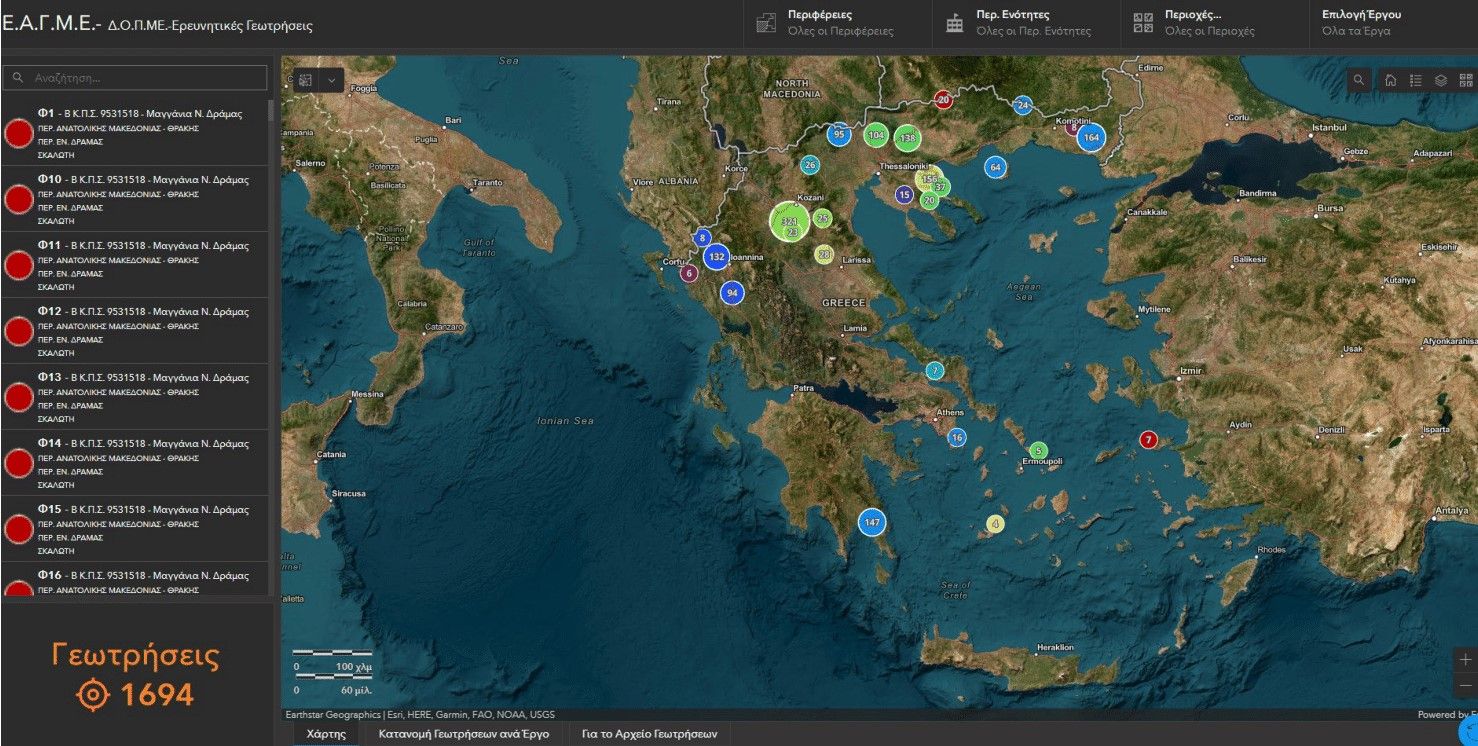
As part of another coordinated effort toward digital transformation, the Hellenic Authority for Geological and Mineral Research (H.S.G.M.E.) has completed a particularly significant project: the creation of the country’s first Digital Map of Mineral Exploration Drillings.
The digital geographic database (Geodatabase) that was developed serves as a repository for the spatial and descriptive data of 1,694 mineral exploration drillings across Greece, which have been conducted over the years by the national Geological Service.
Through this digital drilling archive, users can study the sequence of mineralization in a specific area while also having the capability for graphical data visualization.
The data entry process followed relevant international standards (INSPIRE Directive), ensuring harmonization, usability, and data reusability.
The Digital Map of Mineral Exploration Drillings was implemented by the scientific and technical staff of the Directorate of Mineral Resources and Mining and the Department of Electronic Governance of EAGME, within the framework of the project “Studies and Research Supporting the Energy Sector of Industry and Entrepreneurship – OPYGEK,” and specifically the subproject “Actions for the Utilization of Primary and Secondary Mineral Resources – DYOPY,” funded by the Operational Programme “Competitiveness – Entrepreneurship – Innovation” (EPAnEK 2014–2020).
Regarding the project’s implementation, the General Director of EAGME, Mr. Dionysios Goutis, stated: “The creation of the Digital Map of Mineral Exploration Drillings of Greece marks another step toward digital transformation and the dissemination of available information from the National Mineral Exploration Programs conducted by EAGME. The ultimate goal is to contribute to increasing the country’s reserves of Strategic and Critical Raw Materials necessary for the energy transition, through the reassessment of domestic resources to ensure the raw materials supply chain. I would like to thank and congratulate EAGME’s staff for the implementation of this demanding yet highly valuable project.”
Access to the digital map is available through EAGME’s website at the following link: