

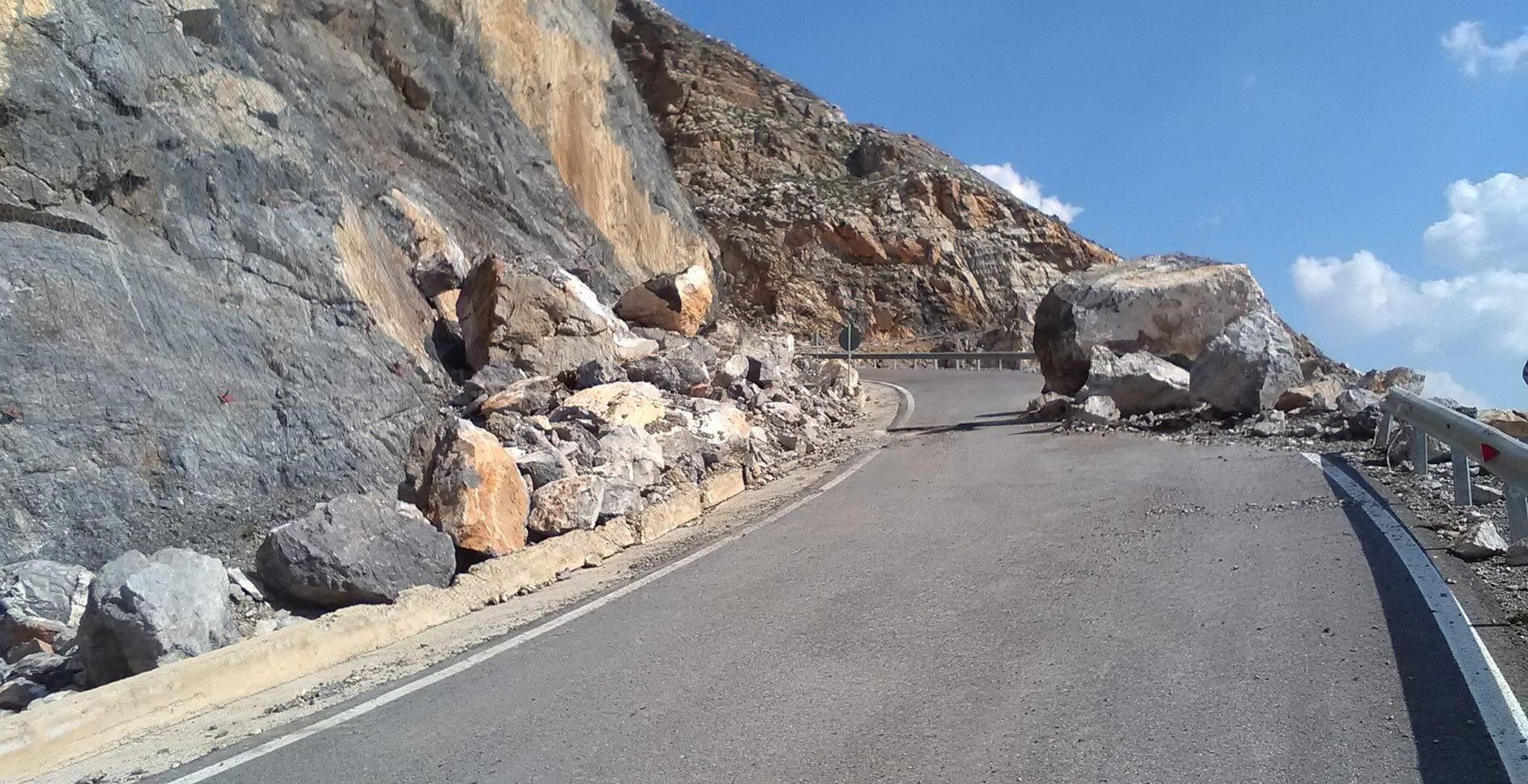
As part of its efforts to inform the competent authorities, the Hellenic Authority for Geological and Mineral Research (EAGME) has issued the Landslide Summary Reports for the years 2020 and 2021, documenting the major landslide events that occurred across the country. The reports were prepared by the scientific staff of the Engineering Geology Department of EAGME and were submitted to the Ministries of Environment and Energy, Climate Crisis and Civil Protection, and Infrastructure and Transport.
According to the data included in the two reports, a total of 501 major landslide events were recorded nationwide during the two-year period, along with their geographic distribution. The reports also provide statistical information on the types of landslides, their monthly distribution, and triggering factors, while also illustrating the qualitative characteristics of their impacts.
In 2020, a total of 312 major landslide events were recorded. The region most affected was Thessaly, accounting for 62.82% of the incidents, followed by Central Macedonia (11.54%), Central Greece (7.69%), and Epirus (5.77%), with fewer incidents reported in the remaining regions.
In 2021, 189 major landslide events were recorded. The region most affected was Western Greece, with 35.45% of the total, followed by Epirus (15.34%), Thessaly (13.76%), the Ionian Islands (10.58%), and the South Aegean (8.99%). Fewer events occurred in Crete (5.82%), Central Greece (4.23%), and the Peloponnese (2.65%), while the remaining regions of the country recorded very few incidents.
The summary reports were compiled based on field inspections carried out either under the Memorandum of Cooperation between EAGME and the General Secretariat for Civil Protection (GSCP) or within the framework of the activities of the Rapid Intervention Team (RIT) and other research projects of EAGME.
Since 2010, EAGME has been preparing annual summary reports on landslide phenomena. It is worth noting that from 1952 to the present, more than 8,000 landslide events have been investigated by the Geological Service of Greece (IGEY – ETHIGME – IGME – EAGME).